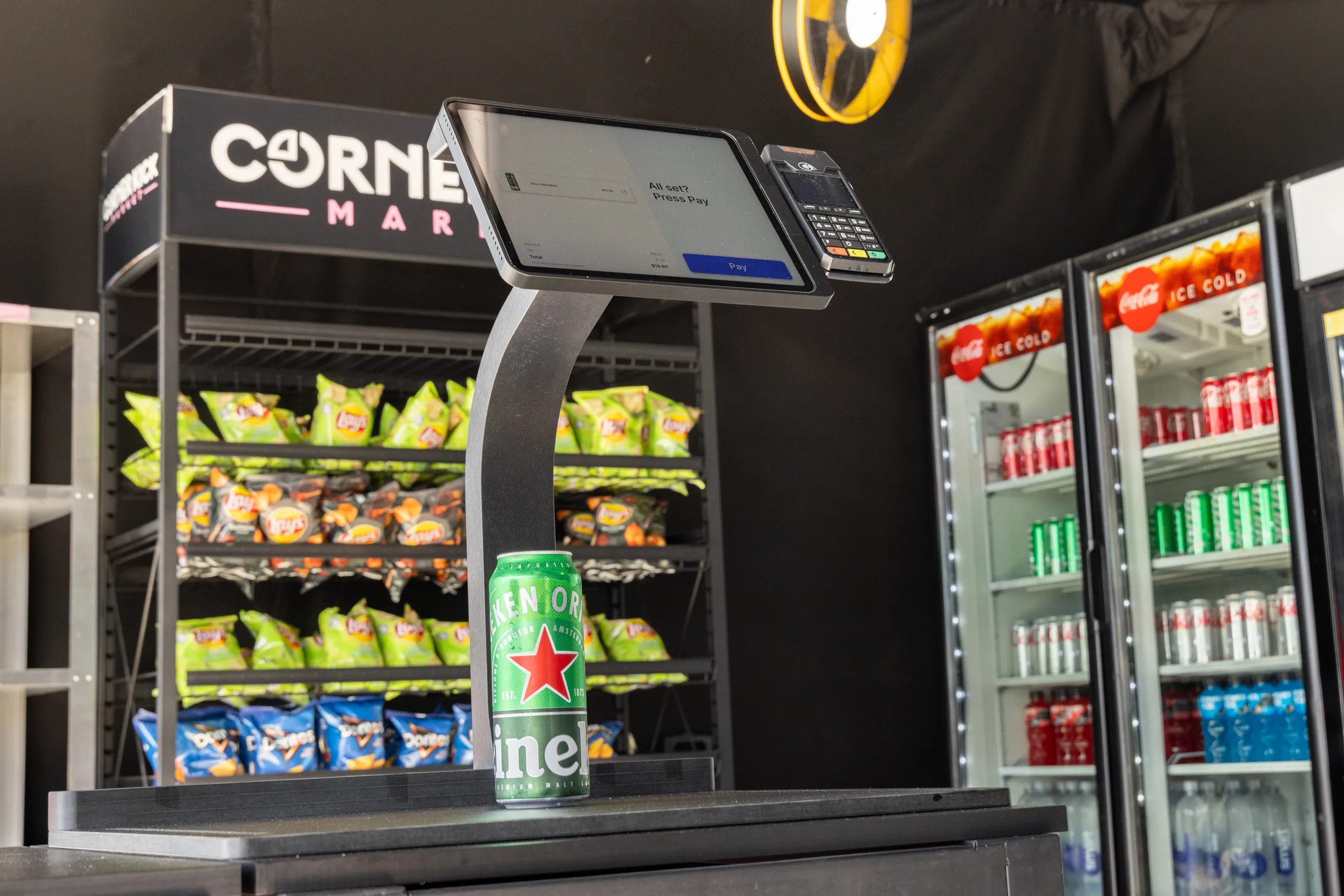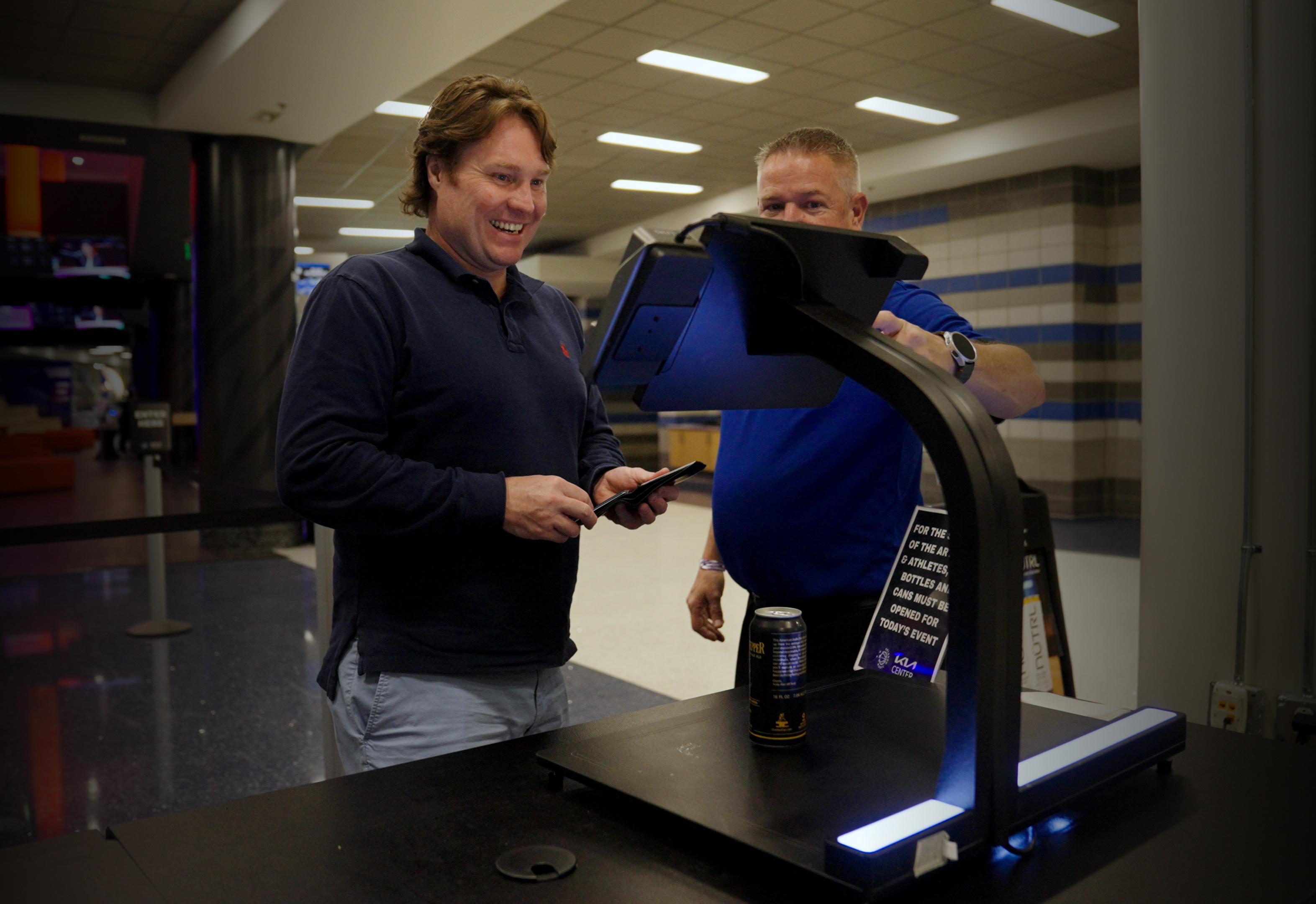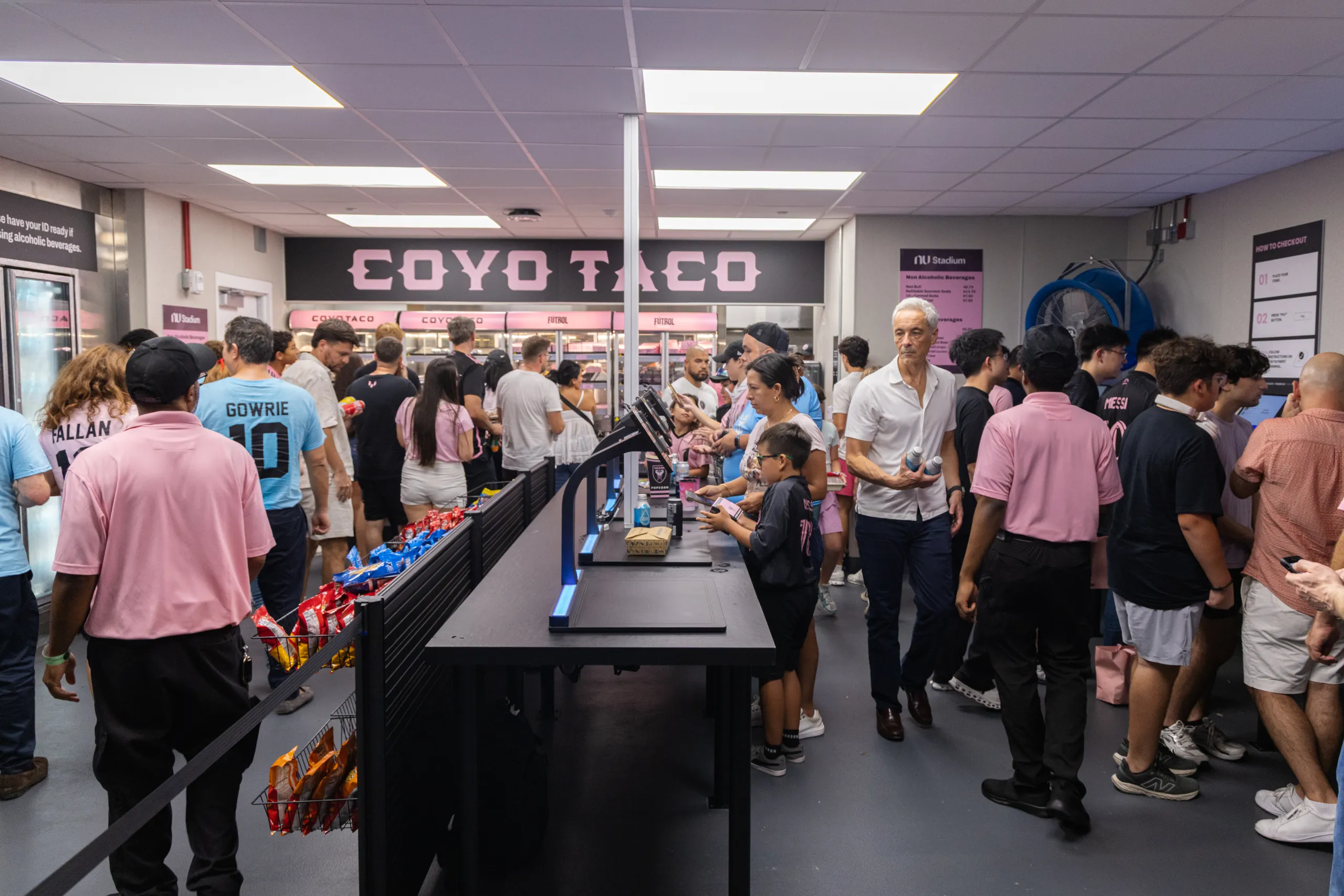
At this year’s IAVM VenueConnect 2026, we hosted a panel where two operators compared notes: a stadium where halftime decides the night, and a convention center portfolio where the audience and footprint change every week. We’ve translated the thoughtful discussion on how self-checkout has impacted their respective throughput, staffing, repeat purchase and revenues into a sharable format.
The conversation was hosted by Iwo Gernemann, President of VisioLab Inc.
What objections did you hear from potential customers, and what objections did you have to overcome in your building when you first thought about putting self-checkout technology in?
Stadium POV: We were in a sandbox environment with Nu Stadium, so we wanted to test a lot of things. The first objection was power and electricity. We solved for that.
The next one was connectivity into our data. What was really helpful with these units versus some competitors was that they could work offline and on WI-Fi.
Another concern was whether people would be able to figure out how to use it. But people are already used to self-checkout. You go to CVS, the grocery store, or the airport, and people know the pattern now.
Cost was another piece. When we first experimented with VisioLab, it was very competitive and much less expensive to trial than some of the alternatives.
Convention Center POV: There's always a worry that removing a staffed register invites theft. Yes, maybe a bag of chips walks out — but when you weigh that against the labor savings, that worry has not played out at the level people expected. There has not been a lot of theft in our buildings. People generally feel like there are eyes on them, cameras, staff walking around.
You also can’t ignore customer touch. Being able to reallocate cashiers and transition them to concierge staff has been a big part of how we still make sure we’re providing that customer touch. That has elevated the experience.
Mobility was a big one too — we have a beautiful built-out main market, but we also need the ability to drop grab-and-go units wherever the business actually is that week. Getting off a fixed ethernet connection and onto Wi-Fi has been a real unlock there.
What key numbers were you looking at for the first deployment, and what numbers do you track on an ongoing basis to validate the benefits?
Stadium POV: In my case, both situations were new business, so it was a little difficult to quantify against a prior baseline. At the temporary stadium for Inter Miami, we went from a smaller temporary stadium to a full one overnight, adding 15,000–20,000 people in one jump, and the technology had to hold up for that. We used a lot of different technologies to solve for that crowd in a stadium that was undersized to begin with.
Going into the new stadium, we already knew from the success in the temporary stadium that we would start with VisioLab. We looked at per caps and numbers from the old stadium, but we more so looked at transactions — how many people can we get through. That is the biggest thing for us.
Convention Center POV: We've seen basket sizes increase somewhere in the 10 to 15% range on average — part of that is a more elevated experience, part of it is guests moving at their own pace.
We are also seeing an increase in speed of service. About a 7-second transaction time is what we’re seeing. If you think about the logistics of it, we no longer need somebody to punch in each individual item. You grab everything you need, drop it right there, everything populates, and then you check out and leave.
So we see an increase in speed of service as well as an overall revenue increase.
How do you view repeat purchases? Are they a sign of happy fans, and how do you measure that?
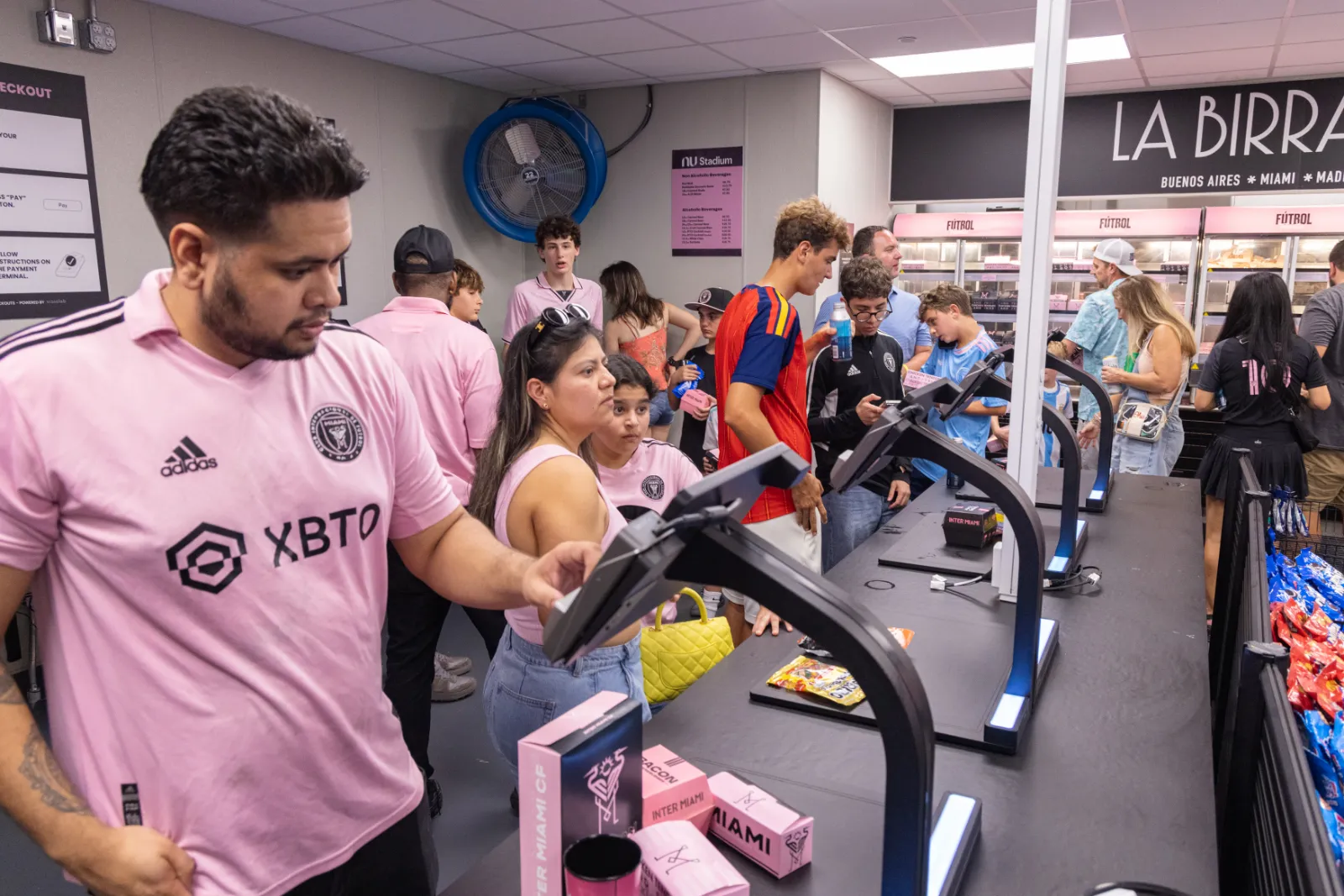
Stadium POV: In a sporting environment, people get into their routine. A big part of Inter Miami and DC is the season ticket member base. You’ve got the same people sitting in the same seats, and you can see those transaction times going down from the first game in April to where we are now. They learn how to use it, they enjoy using it, and they keep coming back.
For the convention center side, how does repeat buyer behavior translate in your world?
Convention Center POV: We want buyers to come back and purchase the same day, but really it’s about the long-term guest relationships and the client relationships and being able to have them return back the next year because they had a great experience when they were on site.
Some of that comes from being able to roll out these markets in different areas, provide additional points of sale, provide relief, and give really good flow to the guests so there is confidence in the venue that we can operate for the volume that’s coming in.
What is the relationship between vending machines and these market setups for quieter shows?
Convention Center POV: We'll always have vending machines for the smallest shows — 200, 300 people — but VisioLab gives us the option to swap vending out for a small market concept at relatively low risk, so even lower-volume repeat guests get a better offering.
Stadium POV: We run a lot of meeting- and convention-style events too, and the same logic applies — you can open a stand without much risk. One other benefit worth mentioning: the system can recognize not just packaged items but open-faced, made-to-order food. Coming out of a food-and-beverage background rather than pure retail, that's the harder problem, and it's been a real strength — it can tell chicken tenders and fries apart from just chicken tenders. That flexibility to reprogram menus game-to-game, or shrink the footprint and move units, is where we've seen a lot of the value.
How has your team worked with these units operationally?
Stadium POV: In the old stadium we adjusted after the first few games — mostly around how many units we had where, without needing to move much physical hardware around. The units themselves are lightweight, around 20 lbs each, so they're easy to relocate.
Since soccer is an outdoor environment, one early objection was durability — would these hold up in humidity and rain? They have. Out of about 20 units, we've only had to replace a small number of components — mainly an LED strip — and it's now waterproof, holding up over about three years.
Convention Center POV: The ability to execute quickly is a big part of it. You can change things day in and day out during shows. If we notice that some hot food item is not doing extremely well, then we change the menu the next day. This gives us the ability to get all the pictures in immediately that morning and be able to sell that new item right away. There is a lot of flexibility.
How do you decide where to place these first? Do you start with high-throughput areas, convert an old market, or look for something else?
Convention Center POV: It gives us the option to find unused space and build a market there. We just opened one that was basically an open area; we built a blockade around it and turned it into a market. Beyond that, it's about moving the market to wherever the business is that week and making sure it's visible.
In our convention centers, we're actually seeing about 65% of total sales happen through the mobile markets, not the built-in ones. The fixed markets are a destination, but the mobile units give guests the flexibility they need.

Also, signage turned out to matter more than we expected — a clear "self-checkout here" sign with a big arrow does more than almost anything else to move people through. That, plus having a concierge walk people through rather than hover over them — hovering tends to slow people down. Two or three quick signage steps, and people figure it out regardless of age or background.
We saw that even at a train show event — about 45% of total event sales came through that one market, in a crowd you wouldn't necessarily peg as early-adopter tech users. People seem to genuinely enjoy using it — watching everything populate on the screen gets a reaction.
If someone is just now thinking about deploying something like this, what do you wish you had known beforehand, or what advice would you give them?
Stadium POV: For me, it is the ability to make this happen really quickly. Going back to when Messi first came down to Miami, we got the official word in June and his first game was in July. We deployed VisioLab and a lot of other technologies in less than 30 days from beginning to start.
Once you get the equipment there, it can get turned on in 24 to 48 hours. Compared with bigger fixed builds – new electrical, new internet – that take a lot longer.
Convention Center POV: It’s the ability to execute it and get it on board quickly. The real lesson is you don't need to build the full, beautiful market on day one. Sometimes we've delayed ourselves waiting to build it all out perfectly. You can launch with what you have on-site and iterate — change the menu the next day if a hot item isn't moving, get new photos in that morning, start selling the new item immediately. There's a lot of flexibility if you're willing to start rather than wait for the perfect build.
If you look three to five years into the future, where do you think this goes in stadiums and convention spaces?
Convention Center POV: We were talking about how to mobilize these more and more. More mobility — more Wi-Fi capability, less dependence on finding a plug or running extension cords, so units can pop up in the middle of a busy expo hall.
Audience Q&A
You’ve talked a lot about the successes with the implementation. What are some of the challenges you’re seeing with the day-to-day operation of this?
Convention Center POV: Honestly, reporting. When you're running multiple point-of-sale systems, getting to one streamlined report is still a work in progress — we've talked about building a par-level and stand-sheet process into it too.
Stadium POV: Same theme from our side — it's not unique to VisioLab. In stadiums we're often running four or five different technologies that don't all talk to each other on the back end, which takes more coordination. At the same time, VisioLab has been able to solve for a lot of the loyalty and integration needs, including different credit card processors and systems like Lava and Fortress. We've got shared development roadmaps going forward on what still needs to connect.
Has anyone looked at facial recognition for automatic checkout and payment?
Iwo: We actually have an integration with Wicket, and that has been active with the Falcons in Atlanta. The challenge is adoption. You want people to register beforehand, and that is still the hurdle. But it’s a great experience because it uses the front-facing camera of the iPad, so there is no additional hardware. If we could get more people to register, that is one of the best-designed setups.
Stadium POV: We're planning to use Wicket for suite access at Capital One Arena, since that's a repeat audience event after event. How that extends into general admission and concessions more broadly is one of the more interesting open questions right now.
Two questions — are you rear-loading hot food items, and how does that work logistically? And how are you handling alcohol carding?
Iwo: Rear-loading is actually the best use case — that's how the new Inter Miami stadium was built out, and it's common in our convention center markets too. Detection uses three to five images per item, since hot, made-to-order food doesn't look identical every time — that's the problem VisioLab started by solving.
On alcohol: there are a few methods. We can scan a driver's license barcode, or the system can detect alcohol in the basket and hold the transaction for a staff member to release remotely. In high-volume, drink-heavy markets, the more common approach is still checking IDs before guests even reach the unit, often with a concierge doing that job. The Wicket biometric integration also captures age at registration, so it can combine age verification and payment in one step — but in practice, physical ID checks are still what most venues default to.
Can you share any specific metrics on per-cap or transaction increases?
Stadium POV: At the temporary Fort Lauderdale stadium, compared to a similar self-scan technology, we saw transaction time cut in half — from about 30 seconds down to about 15. That's the KPI we watch most closely in sports, and it matters just as much in performing arts — a 15-minute opera or ballet intermission lives or dies in those seconds.
Convention Center POV: From the convention center standpoint, definitely per cap, but I would point more to basket size. We are seeing a larger basket size, and when we have rear-loaded hot food concepts, we see a stronger per cap and a stronger basket size.
Iwo: In a few case studies, we’ve seen up to doubling the amount of revenue with VisioLab. More consistently, we usually see 50 to 60% higher revenue in stadium space. We also see the repeat purchase rate improve in double digits versus previous solutions.
And from a recent study in both Europe and the US, this does not seem to be cannibalizing revenue elsewhere. This is net-new revenue that we are able to generate.