The Back of House – field notes and best practices from the busiest venues in the industry.
You added self-checkout to move fans faster. Then, you stationed someone next to it to help and gave back a significant portion of the gain.
It's one of the most consistent patterns we see across sports and entertainment venues: operators deploy self-checkout at the point of sale with the right intention -- shorter lines, faster service -- then they position staff beside the units to assist.
The result is counter-productive. The help slows things down.
What our data shows.
Venues that position staff directly beside VisioLab units – whether to assist, monitor, or reassure fans – see transaction times slow down by 25 to 50% compared to units running without direct intervention.
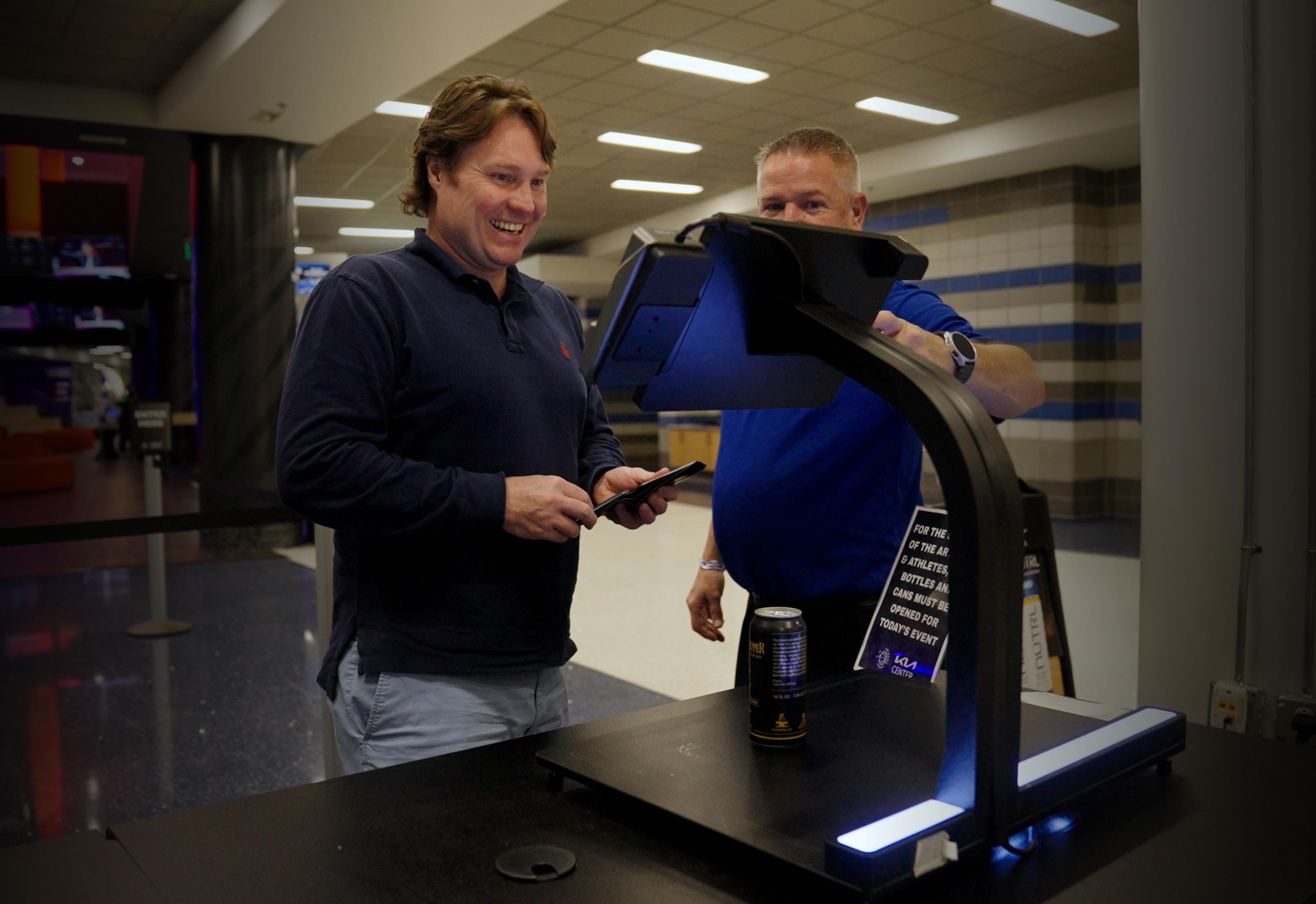
The dynamic is predictable once you see it. A fan approaches, spots an attendant, and waits for instruction instead of starting. The attendant steps in before the fan has a chance to figure it out. The checkout takes longer than it would have with no one there at all.
Self-checkout works faster when fans own the interaction. A second person in the transaction kills speed.
Where staff actually belong.
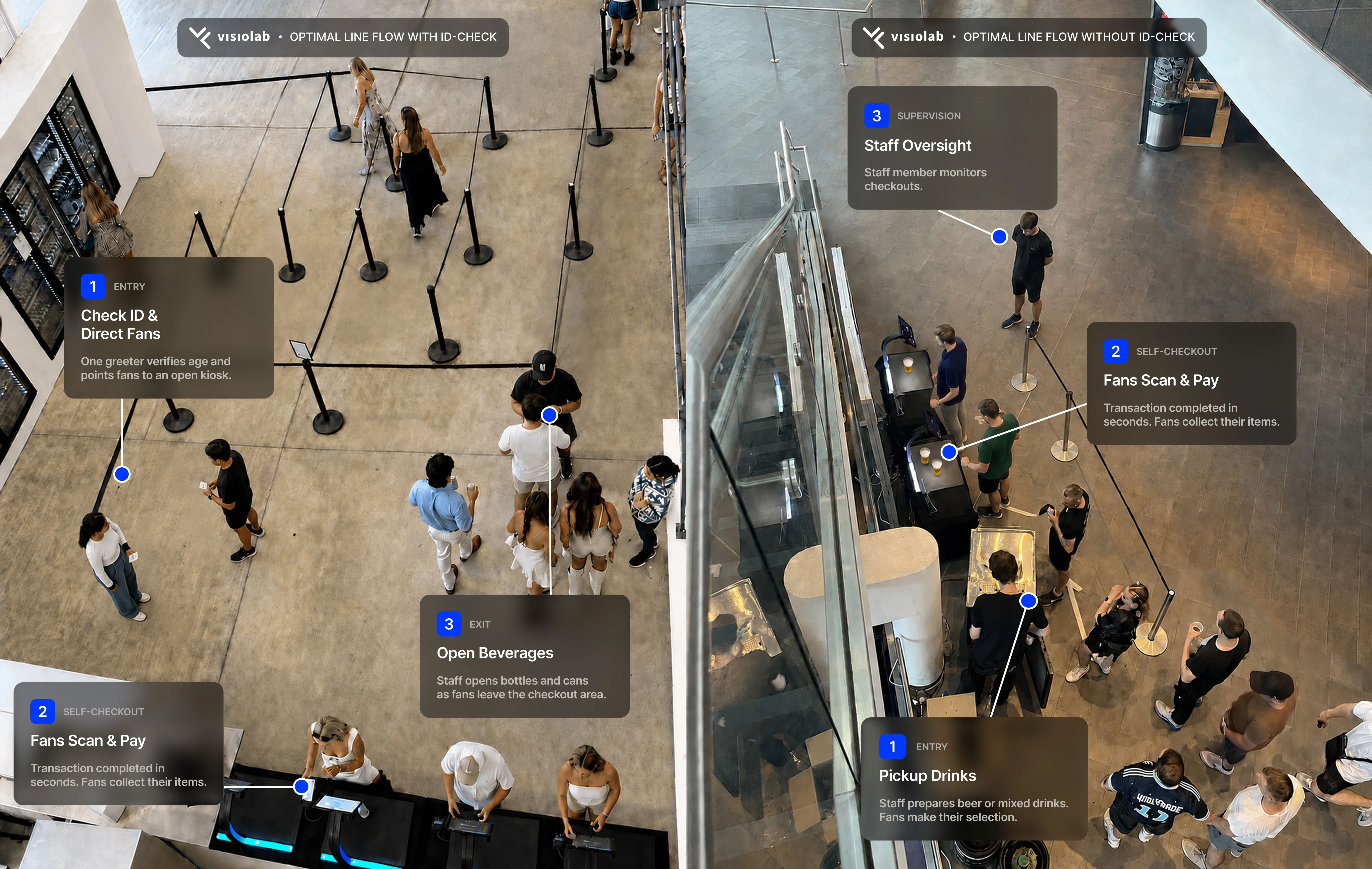
The photo above shows what good line flow looks like in practice.
Three things are happening simultaneously:
1) Staff are positioned at the entry point of the line, checking IDs and directing fans to the next available POS.
2) A second staff member is downstream opening cans and bottles, removing another potential delay from the checkout moment itself.
3) At the kiosks, fans are completing transactions on their own.
This separation in staff placement is the ideal model. Each role has a defined position in the flow, and nobody is crowding the screen.
A note on tipping.
Tip prompts don't just add a decision moment. When staff are compensated through tip pools, it creates an incentive for them to linger at the unit. We recognize tipping structures are tied to staffing arrangements that vary by venue, but the data is consistent: the structure creates conflicting incentives, and the throughput reflects that.
The recommendation, when it comes to optimizing throughput, is to disable tip prompts at self-checkout units. How venues structure staff compensation in response to that is a conversation worth having before going live.
With VisioLab consistently driving higher throughput and revenue than traditional POS solutions, this results in more revenue to share. Aligning incentives isn't a new idea, but it works here, too. Where compensation structures allow, we’ve seen revenue-sharing on incremental sales effectively achieve this alignment.
When staff share in the extra revenue a concession stand generates, faster throughput becomes everyone's goal. This results in more checkouts, higher sales, and better outcomes for both the venue, and the team running it.
The counter-intuitive truth about self-checkout.
Fans learn fast. The best thing an operator can do for throughput is let fans manage their own transaction without interference.
VisioLab is designed to be intuitive, and guests are fast from the first transaction. There is no hand-holding required, and we don’t see a learning curve reflected in the data.
Which brings it back to the staff.
The takeaway for operators is simple: the goal isn't a staffing reduction, it's a staffing repositioning. Same headcount, better placement, faster flow and higher revenue.